
$
$
Product successfully added to your shopping cart.
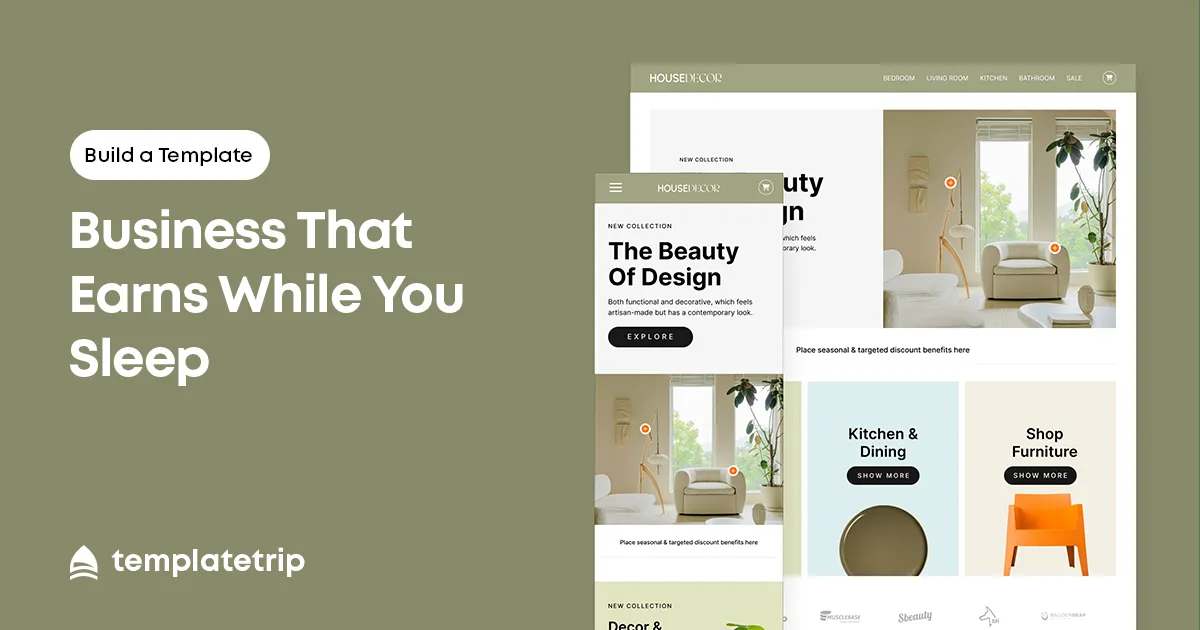
There is a difference between selling templates and running a template business. Selling templates is a series of transactions. A template business is a system — with a catalog strategy, a quality process, a marketing approach, and income that continues growing even when you are not actively working on it. This guide explains how to build the system.
A template business creates digital products (templates) once, lists them on one or more marketplace platforms, and earns ongoing revenue from those listings with minimal marginal effort per additional sale. The business compounds over time as the catalog grows, reviews accumulate, and seller reputation drives increasing discovery and conversion.
The most successful template businesses are niche-focused, not category-broad. A seller who builds exclusively Shopify themes for the pet industry — pet supply stores, vet clinics, grooming services — builds a recognisable identity within that niche, develops genuine expertise in what pet industry buyers need, and accumulates reviews from a consistent buyer type that reinforce the seller's authority in that space.
Choose a niche where: buyer demand is consistent; the existing template supply has identifiable gaps; your design skills are well-suited to the aesthetic requirements; and the platform has a strong marketplace presence on TemplateTrip.
A catalog system means having a documented process for how you build each new template — from initial concept to live listing. This process should specify: how you research buyer needs before starting; what your design-to-code workflow looks like; what quality standards must be met before submission; what your standard documentation package includes; and what your post-submission maintenance schedule looks like.
With a documented process, your third template takes half as long as your first because you are not rediscovering workflow decisions you already made.
The marketplace is the distribution infrastructure of your template business. Choose it with the same deliberateness you would apply to any significant business infrastructure decision. The criteria: commission rate (how much of each sale you keep), buyer traffic volume, quality reputation, and exclusivity terms.
TemplateTrip's 80% flat non-exclusive commission means your business retains 80% of every sale from day one, without sacrificing the ability to also list on other platforms. This is the infrastructure choice that maximises your earnings without constraining your distribution strategy.
A template business that depends entirely on marketplace-generated traffic is exposed to that marketplace's traffic variability. The highest-ROI marketing activity for most template sellers is content creation that earns ongoing organic search traffic. A YouTube tutorial on how to set up a pet store on WooCommerce that recommends your theme generates recurring referral traffic indefinitely after the video is published.
The template businesses that compound most reliably are those that treat maintenance as a business process, not an afterthought. Schedule quarterly reviews of every active template: check platform compatibility with recent updates, review new buyer feedback for improvement opportunities, and assess whether the listing's preview images and description still accurately represent the product.
Iteration is also a product strategy. A template that has sold 200 times has generated 200 buyer interactions — many of which contain improvement signals in the form of support questions and feature requests in reviews. Version 2.0 of a proven template is a faster, more confident build than the original — and a version update is a marketing event that re-engages past buyers.
build template business 2026, template business passive income, scalable template selling, template catalog business model