
$
$
Product successfully added to your shopping cart.
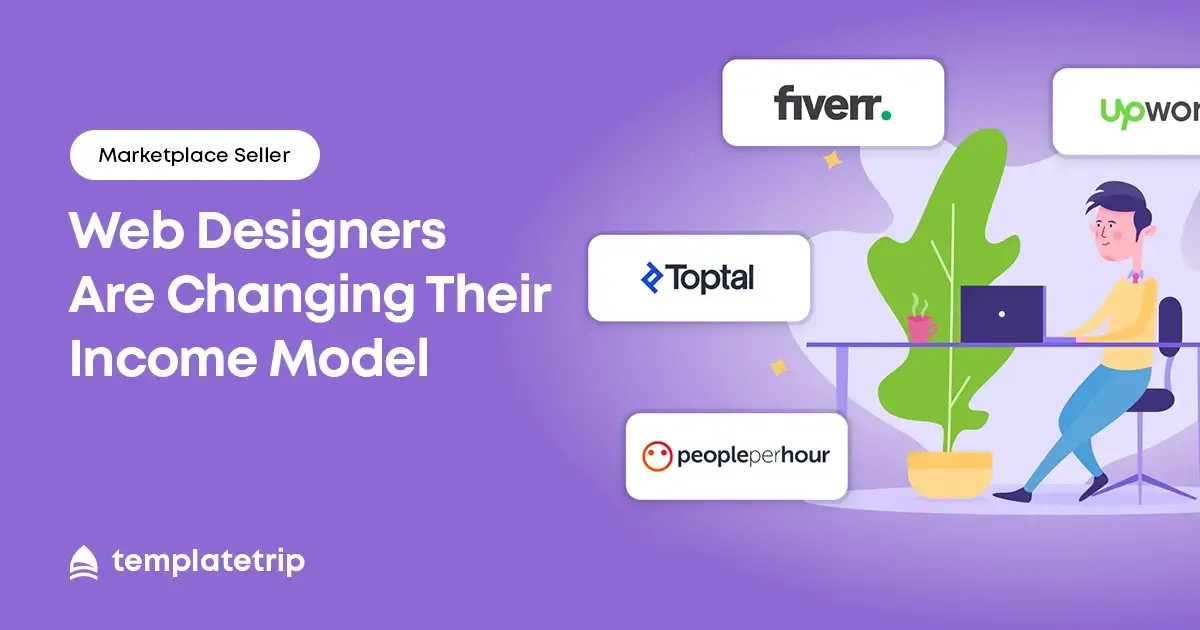
Freelance web design and development is an active income model: you work, you get paid. When you stop working, the income stops. Selling templates on a marketplace is a passive income model: you build once, and the template earns repeatedly. An increasing number of web designers and developers are making the transition from one to the other — not by giving up freelancing, but by building a template business alongside it.
Most web designers build dozens or hundreds of websites over the course of their careers. Each project produces a custom design that is delivered to one client and never used again. The skills, the design decisions, the problem-solving — all of it is consumed by a single project and then inaccessible to the next client who needs something similar.
Template selling changes that model. Instead of building a custom design for one client at one price, a designer builds a template once and sells it to hundreds of buyers. The design decisions are still single-effort. The income is multiplied. The ratio of income to time invested is fundamentally different from the per-project freelance model.
Web designers who have built sites professionally have three significant advantages over non-designer template sellers: they understand real client requirements, which means their templates are built around actual buyer needs; they have production-quality design and code skills, which means their templates meet marketplace quality standards; and they have a portfolio of client work that demonstrates the problem-solving capability buyers are purchasing.
Look through your client work history for the project you are most proud of — the one that solved a real commercial problem effectively and looks excellent in its final form. This project is the template concept you should build first. You already understand the problem it solves, the buyer who has that problem, and the design decisions that make the solution effective.
Your client project was built for one specific client's brand, content, and business context. To turn it into a template, replace brand-specific elements with configurable options, fill it with representative demo content, and document the customisation options buyers will use to make it their own.
The live demo and documentation are where most designers underinvest. Spend as much time on the demo as on the template itself. Fill it with realistic content — professional photography from free stock sources, realistic product or service descriptions, proper navigation structure. Build documentation that explains installation and customisation clearly enough that a non-developer buyer can successfully set up the template without your involvement.
Choose a marketplace that serves buyers in your template's niche, pays a fair commission, and does not require exclusivity. Submit your first template and treat the review process as a quality audit. Act on any feedback specifically and completely.
Do not wait for the first template to succeed before building the second. Catalog depth compounds. A seller with three quality templates in a niche has a proportionally stronger presence than a seller with one. Build the second template while the first is in review, using everything you learned from the first to make it better.
Template income grows slowly at first. The first 3–6 months are an investment period — building the catalog, accumulating reviews, establishing your seller identity. Most designers make this transition without abandoning freelance work, using template building as a structured activity during periods between client projects.
The financial threshold worth targeting in the first year is $500–$1,000 per month in template income. At that level, template revenue is meaningful supplementary income and the catalog is beginning to compound. By year two, with 5–8 quality templates and growing review counts, $2,000–$4,000 per month is achievable for a designer who has built in a niche with consistent buyer demand.
freelancer to template seller 2026, web designer passive income templates, freelance to marketplace template transition, web designer income diversification