
$
$
Product successfully added to your shopping cart.
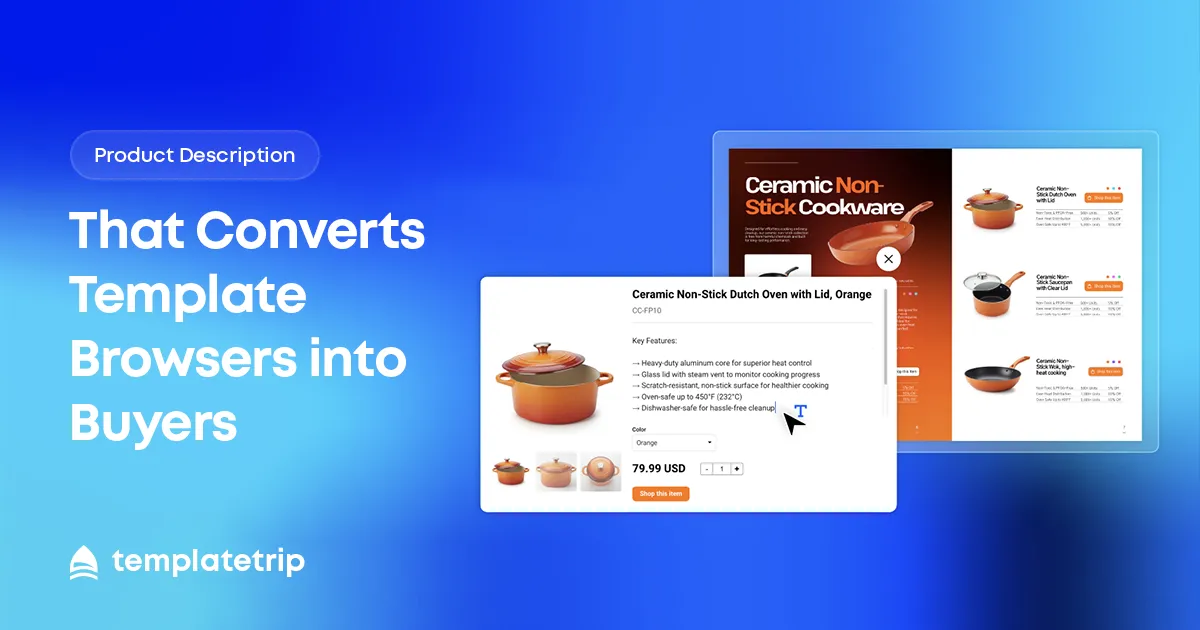
Most template product descriptions are feature lists wrapped in generic superlatives. "Fully responsive. Highly customisable. Perfect for any business." These descriptions do not sell templates. A product description that converts browsers into buyers does something different: it speaks to a specific buyer's specific situation and makes the purchase feel like an obvious decision.
A feature list tells buyers what a template has. A selling description tells buyers what the template does for them. These are fundamentally different communications, and only one of them converts.
Consider two descriptions of the same WooCommerce pet store theme. Description A: "Includes 150+ theme options, Elementor compatibility, Revolution Slider, One Click Demo Import, responsive design, blog section, and product filters." Description B: "Built specifically for pet supply stores and veterinary clinics. Set up your full store from the one-click demo in under an hour — then customise colours, navigation, and product layouts using the Elementor page builder, no developer needed. The product pages are designed to handle multi-species, multi-category pet catalogs with the filtering and navigation that pet buyers actually use." Description B sells. Description A informs.
The first 2–3 sentences should answer the question: "Is this for me?" State the template's intended use case and buyer type explicitly. "A Shopify 2.0 theme built for fashion and apparel stores that want an editorial look without sacrificing conversion performance." This immediately qualifies the right buyers and sets accurate expectations.
List your features, but follow each feature with a brief explanation of what it means for the buyer. Not "Mega menu included" but "Mega menu with category images — so buyers can navigate your full product catalog by department without guessing where to look." The formula is: [Feature] — [what it does for the buyer]. Apply this consistently and your description answers the question "why does this matter to me?" for each capability.
End with a clear statement of what is included in the download — theme files, documentation, demo content, any included plugins or assets — and a direct invitation to view the demo. "Download includes: complete theme files, full documentation, one-click demo data, and all necessary plugins. Preview the live demo before you buy using the link below."
The best product descriptions speak the language of the buyer's industry. A description for a WooCommerce theme targeting natural beauty brands should use terms that beauty brand owners recognise — ingredient transparency, clean beauty, sustainable packaging — not just web design terminology. This niche language communicates expertise. Buyers who read a description that demonstrates the seller understands their industry feel more confident that the template was built for their specific use case.
Your product description is indexed by the marketplace's internal search engine and, in many cases, by Google. Writing a description that includes the specific search terms buyers use — "Shopify 2.0 theme for fashion stores", "WooCommerce pet store theme with Elementor", "OpenCart electronics responsive theme" — improves your listing's discoverability for buyers who search with intent.
template product description tips, how to write template listing description, convert template browsers to buyers, template marketplace listing copy