
$
$
For a limited time, take 20% off any new website plan.

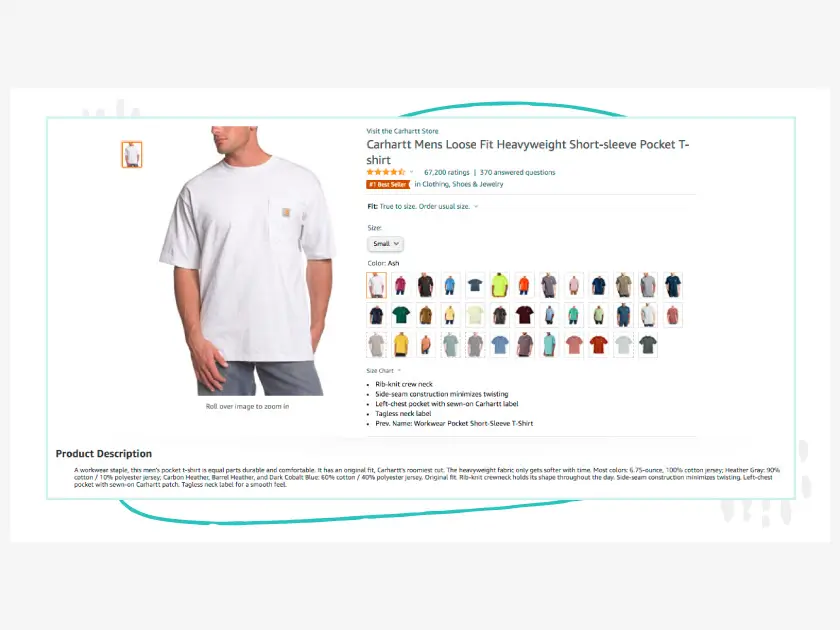
There is a difference between a product listing that informs and a product listing that sells. Most ecommerce product pages are information pages — they tell the customer what the product is, show a few photos, list specs, and leave the buying decision to chance. A+ product listings are selling pages — they communicate the brand's values, demonstrate product superiority, answer objections before they arise, and create the buying confidence that turns first-time customers into loyal ones.
A standard product listing answers: "What is this product?" An A+ listing answers: "Why is this the right product for me? Why should I trust this brand? What will my life look like after I own this?"
When a product listing is comprehensive, visually rich, and clearly invested-in, it signals something important to the customer: this brand cares. This is not a drop-shipper with stock photography. This is a brand that stands behind what it sells.
This signal is particularly powerful for your loyal, repeat customers — the segment representing the highest lifetime value and the highest likelihood of advocacy. These customers are not just evaluating the product; they are evaluating whether the brand continues to deserve their loyalty.
Consider the difference between two competing products:
Product A: Three white-background photos. A 50-word description copied from the supplier. Star ratings shown. A spec table in a generic font.
Product B: Eight photos including lifestyle shots, detail close-ups, and a scale reference. A 200-word benefit-led description in a distinct brand voice. A comparison section. Four featured customer reviews with photos. A "Who is this for?" section. A brand values paragraph.
Both products might be functionally identical. But Product B converts at higher rates, commands a price premium, generates more reviews, and builds customers who feel a connection to the brand. That connection is worth more than any discount strategy.
Above the fold: your best product image, benefit-led title, price, a trust signal (review count and rating), and an Add to Cart button. Clean, fast-loading, uncluttered. The hero creates the first impression that makes the customer want to keep reading.
A 100–200 word narrative explaining why this product exists, what problem it solves, and what makes it worth choosing over alternatives. Written in the first person or brand voice — not corporate passive voice. This section transforms a product listing into a brand experience.
For each core feature or benefit, a dedicated visual panel: a close-up image or short video clip paired with a 30–50 word explanation. Show the stitching. Show the component quality. Show the ergonomics in action. Demonstrate quality in ways a spec list cannot.
A comparison chart showing which version suits which use case eliminates the friction of indecision. A size guide, compatibility checker, or "Who is this for?" section reduces returns and increases satisfaction for every customer.
Select 4–6 of your best reviews — specific, detailed, varied in perspective — and feature them prominently. Photo reviews from real customers carry especially high credibility. An aggregated "What customers say" section with 2-line highlights signals depth of satisfaction in a scannable format.
A short section near the CTA summarising your quality guarantee, return policy, and brand commitment. "Free returns within 30 days, no questions" placed near the buy button removes the final barrier between consideration and purchase.
Rich product content is not just a conversion tool — it is an SEO asset. Longer, richer descriptions rank better for long-tail queries. FAQ sections capture natural language questions that customers type into Google. Alt-text on detailed product images drives image search traffic. Brands investing in A+ content compound their organic search advantage over time, reducing dependence on paid traffic.
A+ product listings are about serving your best customers well. Loyal, high-value customers who already trust your brand deserve the depth of information and quality of presentation that reflects the relationship they have built with you. The investment pays back in higher conversion, stronger loyalty, lower return rates, and a compounding SEO advantage. It is one of the highest-ROI investments a brand can make in its product experience.
A+ product listing, A+ content ecommerce, product listing optimisation, how to write product descriptions, ecommerce product content, product page trust signals, brand content ecommerce, product listing SEO